


Consano Earth's Summer 2026 Letter

2026 is the fifth full year for Consano Earth having been formalised in 2021. Our objective for this year, and every year going forward, is to add momentum to the fantastic work being done by our charity partners through rising financial and other support. Our efforts focus on smaller organisations where we believe our unrestricted funding can make a real difference and where we hope to be able to add value either ourselves or through our personal and professional contacts. Prior to 2024 we published an annual letter every Christmas that looks back on what we have been up to as well as some of the things we were looking forward to for the following year. However, in 2024 after a busy six months we published a mid-year review and we have done the same since.
Our two core charities remain Heal Rewilding and Project Seagrass but this year we have added I Stand Beside and The Missing Lynx Project to the organisations we support. This page provides details of all our charities as well as links to their websites for those wanting to learn more.
Visiting the West Country’s Temperate Rainforests
Last year we began supporting The Thousand Year Trust, the only charity in the UK dedicated to the restoration of our temperate rainforest landscapes, which is run by Merlin Hanbury-Tenison and his team in Cornwall. There is a much greater awareness of the importance of temperate rainforests today than a few years ago largely thanks to two books namely Guy Shrubsole’s “The Lost Rainforests of Britain” and latterly Merlin’s “Our Oaken Bones: Reviving a Family, a Farm and Britain’s Ancient Rainforests”. Anyone unfamiliar with the wonders of Britain’s temperate rainforests should watch this short film from the Woodland Trust narrated by Sophie Pavelle.
Britain’s temperate rainforests today cover at most 5% of their range lingering in the Scottish Highlands, Northern Ireland, the Lake District, parts of Wales and the South West. Whilst The Thousand Year Trust’s efforts currently focus on the South West, they see themselves as a national charity.
Today the charity focuses on three core areas:
Managing the 240-acre hill farm where Merlin and his family live which includes 80 acres of temperate rainforest. The farm is a wonderful demonstration project showing how other landowners could use this natural restoration model at a time when a pure focus on food production is increasingly uneconomic.
Building Europe’s first research station for temperate rainforests in Europe. We provided some details and visuals on this in our Summer 2025 letter available here. Foundation work has already begun, and the team expects the station to be up and running mid-2027. Fundraising for this critical initiative continues and was boosted in June when Merlin and his 90-year-old father Robin did an astonishing 104-mile water-bike ride on the River Thames through 31 locks over 4 days setting off from Magdalen Bridge in Oxford and finishing up in Teddington Lock in London. We were at the finishing line to cheer home the exhausted pair. Well done to Robin and Merlin on achieving such a fantastic feat!
Leading the Cornwall Rainforest Project which aims to bring together c.30 farms across 10-12k acres in the Fowey catchment area to triple the amount of rainforest growing across Cornwall.
We visited Merlin again in May for an update and to walk again through the rainforest. Our timing could not have been better as we were treated with a carpet of bluebells whether we walked.

Temperate rainforests are biodiversity hotspots which are home to over 2,000 species of lichens and 1,000 species of bryophytes in the UK, many of which are rare, as well as being a shelter for wildlife. The UK is actually a stronghold for lichens, with more species than any other country in Europe.
Protecting and restoring these majestic habitats which cover less than 1% of our planet’s surface is critically important. The west coasts of Britain and Ireland are one of the few places in the world with the right conditions for these forests to thrive, making them a unique and irreplaceable part of our natural and cultural heritage, and a global priority for conservation.
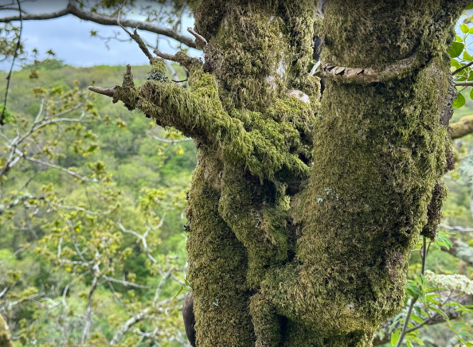
The South West has both a rare opportunity and responsibility to protect and restore one of the world’s rarest habitats. These temperate rainforests are highly fragmented and fragile, but it is not too late to act.
Notable work is already underway across the region, and organisations have come together through the South West Rainforest Alliance (SWRA) to pursue a shared vision: a rainforest landscape that is thriving once again - richer in biodiversity, better connected, and more resilient to future threats.
The SWRA is restoring 67 woodlands in the temperate rainforest zone, while reaching out to other landowners to support their restoration efforts too. Their vision is for a bigger, better, more joined-up landscape of woods, hedges and trees where wildlife flourishes and people enjoy and value these habitats. Last year the SWRA published “The State of the South West Rainforests” which provides the first ecological baseline of temperate rainforests in the region. More information about the SWRA is here.
The Woodland Trust is playing a key role in the region owning c.2% of the temperate rainforest in Devon and Cornwall. They are a leading partner of the SWRA and are vocal about the importance of working at a landscape scale and not just focusing on your own parcels of land. Along with the National Trust they own and manage Ausewell Wood, 342 acres of wild, rugged wood and heath with dramatic rocky outcrops, boulders and screes, dense woodland and damp temperate rainforest along the famous River Dart. We visited Ausewell and were kindly hosted by David Rickwood, Sam Manning and Claire Miller (thanks to Claire for taking the picture!).

The Woodland Trust bought Ausewell in 2020 and have embarked on a 50-year ancient woodland project. Early work focuses on removing and thinning conifer plantations and invasive non-native species creating space and sunlight for growth on the forest floor. This allows slow growing lichens, mosses, liverworts and ferns to thrive. The picture below shows the contrast with oaks in the sunshine on the left and the darkened conifer dominated forest on the right.

The Woodland Trust recently purchased Buckland Wood, a 253 acre woodland close to Ausewell, and are currently fundraising to support the long-term rainforest restoration programme.
A highlight of our walk around Ausewell was chatting with Sam Manning, the Site Manager and Rainforest Recovery Treescape Lead. Sam is working hard on a new book coming soon. “Flowscape” will explore the hidden connections between oceans and forests and specifically how salmon are the lifeblood of rainforests. Salmon are nutrient transporters. They hatch in freshwater rivers, migrate to the ocean where they grow, and then return to rivers and streams to spawn and die. When they die, their bodies release marine-derived nutrients like nitrogen and phosphorus into otherwise nutrient-poor freshwater and surrounding forest ecosystems. Sadly, returning salmon numbers have been decimated given, deforestation, degradation and drying out of moorland peat in headwaters and high river flows are lowering pH of rivers and raising the water temperature. We are getting more winter temperatures of 18 degrees which is lethal for salmon given they need 12 degrees or less to spawn. Getting the salmon back can greatly improve the state of malnutrition in the forest.
We are in discussions with Sam to see how we might be able to help accelerate his important work.
The Great Bustards Show
One of the highlights in our calendar is spending a May morning in Wiltshire on the fields of Salisbury Plains with the Great Bustard Group team. Founded in 1998 by David Waters, the Great Bustard Group’s mission is to restore this beautiful bird, the only one in the UK which is globally endangered per the IUCN.
The Great Bustard is the world’s heaviest flying bird weighing in around 20kg. For context a swan is about 12 kg. This time of year, the lek is in full swing with the males looking their best and showing off their incredible display.
Silage cutting is by far the biggest threat to these ground nesting birds, and it was wonderful to learn that in the 2025 season there were no known casualties from this. This has been helped immensely because of thermal imaging drones at dawn that help locate nests. Some nests have already been found this year. 10 chicks were hand-reared and released in 2025, a significant number in the context of around 60 birds in the local area. If a chick makes it through winter, they are likely to live another 15-20 years.

In exciting news, the Threatened Species Recovery Actions (TSRA) project by Natural England has listed specific actions for Great Bustards that focus on habitat and farming management, reducing mortality (especially nests and collisions), and supporting the reintroduced population through monitoring and partnerships. The Great Bustards have now been designated a priority for Natural England and conservation. Sadly, this does not automatically lead to direct funding, but it is beneficial to the application process.
The team with only two full time employees is making an incredible impact but needs support from other estates and organisations to bring back the Great Bustards in other parts of the UK such as East Anglia and North Yorkshire where they have lived in the past.
Heal Rewilding’s Inaugural State of Nature Report
This year we have been delighted to support Heal Rewilding’s inaugural State of Nature Report that was published in early June. The report was inspired partly by the absence of substantive content on rewilding within the UK-wide State of Nature report for 2023. The Heal team note how little attention was given to rewilding despite the extraordinary growth of the rewilding movement. We are seeing hundreds of rewilding projects across Britain delivering remarkable ecological changes. Heal believe that stories alone are not enough and if rewilding is to be fully recognised within national nature recovery strategies, we need robust, long-term data that demonstrates impact
The report is available here and is a wonderful read. Heal acquired a 460 acre (186ha) former dairy farm in Somerset in December 2022 so the Report is showing the impact of three years of rewilding. Here are some of the highlights:
The list of Bird species seen at Heal Somerset has grown from 67 species in 2023 to 94 by January 2026, including 21 red-listed species and 28 amber-listed species (up from 11 and 16 respectively).
A breeding bird survey completed in 2024 found 60 breeding species on site, including 12 red-listed and 17 amber-listed species. A wintering bird survey carried out the same year recorded 48 species.
Butterfly species have grown from 11 species in 2023 to 24 by the end of 2025, including three vulnerable or endangered species.
Five small mammal species were found at Heal Somerset in 2024, compared to three species at a nearby organic dairy farm control site, surveyed for comparative purposes. The abundance of small mammals was 188% higher at Heal Somerset than the control site in with 49 small mammals found in the Heal Somerset survey compared to 17 at the control site.
Fifteen bat species with confirmed identities were recorded on site during an acoustic monitoring survey in 2024.
We have been involved with Heal almost since their formation in 2020 and it fantastic to see what they have achieved. We have visited Heal Somerset in March 2023, only a few weeks after its acquisition, April 2024 and most recently May 2026.
Walking the site again with Heal co-founder Jan Stannard the effects of three years of rewilding are very clear to see. The most notable change were the streams helped by the return of free-roaming beavers which have been spreading across east Somerset’s rivers. Pictured here is Nick with Jan with the beaver dam as the backdrop.

Two Tamworth pigs have been recently introduced who are doing a fantastic job overturning the soil with their rootling. They are expected to be joined by some larger herbivores such as cattle and ponies in due course.
Heal has achieved so much in its short time but they are far from finished. They recently announced plans for a second rewilding site in Yorkshire.
Our work with Keep It Wild and their Species Recovery Centre
We have now been supporting Derek Gow and his Keep It Wild (“KIW”) team since 2021, initially funding the construction of a second set of wildcat enclosures, and more recently ongoing funding for their Species Recovery Centre.
Many exciting projects in the UK are achieving landscape recovery but will be inhibited without the rare and lost species required to bring those projects to their full potential. The Species Recovery Centre will collate these species into a central location, then build the captive breeding knowledge required to produce these creatures in quantity. This will allow the team to deliver lost and rare species in volume to landscapes across the UK.
This model has already been proven with water voles, 3,000 of which are now produced annually for
successful release in nature recovery projects across the UK. The species range in the graphic below will all be priority candidates for breeding at the Species Recovery Centre. Due to successful recent breeding the Black Stork and Northern Lapwing have been recently added to the list of species the team will breed for release.

KIW’s work includes partnerships with OC Aviary and Celtic Rewilding both of which we directly support.
OC Aviary, led by Oliver Crowther, focuses on Twites and Red Backed Shrikes recovery. In exciting news, given the expansion of KIW’s bird conservation projects, KIW and OC Aviary have taken on a lease of a larger facility in Derbyshire that is a portion of a disused farmyard owned by Derbyshire Wildlife Trust. We will be visiting the facility later this year.
Our first collaboration with Celtic Rewilding was on the reintroduction of the European Pond Turtle. This initiative is progressing well, and the team are hopeful of securing all the required approvals before a release at a site in Norfolk. We have also supported Celtic Rewilding’s “Lost Frogs” project who successfully raised the funds to invest in a Recirculating Aquaculture System (RAS) at their breeding facility. This builds on the team’s work that was a 2025 Winner of Rewilding Britain’s Rewilding Innovation Fund. The aim is to, in time, reintroduce three frog species that were historically present in Britain but were made extinct due to human impact. These are the Agile Frog, European Tree Frog and the Moor Frog.

During our May trip to the West Country, we visited Derek to get an update on KIW’s work and progress at the Species Recovery Centre. We visited the new Black Grouse breeding pens which hold the birds that arrived in November.

In December we heard the fantastic news that White Storks will be returning to London in 2026. London Wildlife Trust has launched ‘Rewilding East London’, a new species recovery project to reintroduce White Storks and beavers into suitable habitats in East London.
Half of KIW’s current White Stork captive-bred population, shown here, will arrive in Eastbrookend, Dagenham, later this year.

They will be placed in a large aviary tucked in rough grass and scrubland, where they can get comfortable in their surroundings. Their offspring will grow up knowing that east London is home and gradually the aviary roof will be rolled back so the birds can freely come and go and find their own food.
When visiting Derek, we always take the opportunity to pop by and see the wildcats. KIW plays a critical role in building up the British stock of breeding animals. Wildcats were once widespread across Britain. The passing of the grain preservation act in 1566 was a major turning point, leading to a bounty on the head of wildcats.
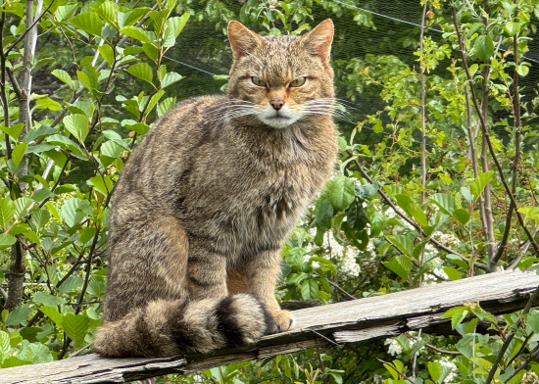
Today they cling on in fragmented population of 30-300 individuals in the Scottish Highlands. They hunt small mammals mostly rabbits.
There are now several captive breeding sites in the UK including at KIW’s site, Coombeshead, in Devon.
Between the sites there are approximately 50 breeding animals. The first release of animals took place in the Cairngorms in 2023 after a decade of captive breeding. The team are hopeful that we might see a wild release in Devon in the near future.
Speaking of wildcats, in April we attended the London premiere of “Clinging by a Claw” which offers an extraordinary insight into the journey of Scotland's wildcats from the brink of extinction to their return to the wilds of the Cairngorms National Park. The film was created by Saving Wildcats and produced by SCOTLAND: The Big Picture, with support from our friends at The European Nature Trust. It was a great evening which included a panel session after the screening which included the wonderful Megan McCubbin. Megan unsurprisingly is a huge supporter of all things wildcats, and it was great to meet her at the event.

Another must watch film is “Derek vs Derek”. It currently is only being shown at specific screenings although a wider release is very likely in due course.
It tells the story of what happens when a farmer who has been working his land for over 50 years (Derek Banbury) has his neighbour (Derek Gow) turn to rewilding. The trailer can be seen by clicking on the image and more information, including how to sign up to the mailing list, is available here.

The Missing Lynx Project
In April we provided some matched funding for the first ever donations appeal for The Missing Lynx Project as part of their Big Give Earth Raise campaign.
Over £129,000 was raised from 1,273 donors, which was one of the largest numbers of individual donations for any Earth Raise campaign this year. This is a wonderful indication of public support for these majestic animals!

The Lifescape Project is leading The Missing Lynx Project, in partnership with Northumberland Wildlife Trust and The Wildlife Trusts.
The Missing Lynx Project are investigating the possibility of reintroducing Lynx to Britain, working closely with our friends at Wildwood Trust, who last October opened a new Lynx enclosure and breeding facility at their site in Kent (we sponsored the opening event and you can read more on this in our Christmas 2025 letter here).
The team hope to submit a licence application by the end of 2026 and the money raised by the appeal will go a long way to ensuring The Missing Lynx Project has sufficient capacity to engage with decision makers.
I Stand Beside
This year we provided some early funding for a new charity I Stand Beside co-founded by our friend Nathalie Seddon. Nathalie is a lifelong lover of nature, a science communicator and an adviser to governments. She is Professor of Biodiversity and Director of the Nature-based Solutions Initiative at Oxford University where her research centres on nature-based solutions that bridge ecological and social sciences with Indigenous knowledge and the arts.
I Stand Beside is dedicated to rewilding the human spirit and sparking a global tipping point in nature connection and nature-positive behaviour. Their mission is to help people form meaningful, lasting relationships with the more-than-human world—and to inspire creative, joyful action in its defence.
The team believe that true rewilding is not only ecological, but cultural and emotional. It begins when people rediscover their kinship with life. By combining storytelling, science, art, and local knowledge, ISB rewilds hearts and minds, empowering people to “stand beside” species and ecosystems—especially those overlooked, endangered, or near at hand.
Knepp hosts Rewilding Britain
In late June we attended a Rewilding Britain supporters’ event that was hosted by rewilding royalty Charlie Burrell at Knepp. Knepp is now 25 years into its magical rewilding journey and every time we go, we are treated to an abundance of wildlife and biodiversity. At the time of our visit seeing the White Stork chicks were top billing with them poised to fledge after a month and a half in the nest. The chicks’ beaks were just starting to turn from a greyish colour to the distinctive bright orange of the adults.

Rewilding Britain CEO Rebecca Wrigley gave an update on some of the charity’s main initiatives as they start their second decade.
The Knepp Wildland Foundation and Rewilding Britain remain two of our key charities and it is great to see them working with another charity we support Youngwilders. Youngwilders is a youth-led charity working to accelerate the nature recovery in the UK and to centre young people in the process and movement. Youngwilders host the UK’s only youth rewilding summit, “Overgrowth”.
Overgrowth is made of up three key aspects, two yearly events and an online series bridging the gaps between.
It is a space for wild ideas - bringing people together to reconnect with nature, each other and our role as environmental stewards. Through big events, a zine and online sessions, Youngwilders explore creative, fun, and unconventional ways to grow our capacity for shaping a wilder, more connected future.
Overgrowth South is hosted at Knepp with Overgrowth North taking place at Hepple Wilds in Northumberland. Two hundred young people attend each event each year.
In 2026 we increased our financial commitment to Youngwilders becoming a key funder of Overgrowth. Overgrowth South this year is on 5-6th September.

If you are (lucky enough to be) between 18 and 30 years old tickets are available through the Youngwilders website and Eventbrite. Be warned they sell out quick!
A thought to ponder over the Summer…. The Innerview
In May the Oceanographic published a special magazine issue that through 53 contributors whose disciplines included astronauts, marine scientists, explorers, divers and submersible pilots, conservation leaders, artists and adventurers, explored the central idea of The Innerview.
The Innerview describes the profound psychological and emotional shift that occurs when people immerse themselves in the ocean. It is presented as the oceanic counterpart to the Overview Effect, experienced by astronauts who see Earth from space humanity’s shared home as one interconnected system, transcending national boundaries and divisions whilst gaining a new appreciation of its fragility, unity, and interconnectedness.
While the Overview comes from distance and observation, the Innerview comes from immersion and participation. The Overview Effect reveals Earth as a small, borderless planet suspended in space, encouraging a sense of global responsibility. The Innerview reaches a similar conclusion through a different path. By entering the ocean, divers, explorers, scientists, and coastal communities experience themselves as part of a vast living system rather than separate from it. The ocean becomes not an external environment but a place of belonging, reminding us that all life originated in the sea and remains dependent upon it.
A recurring theme throughout the collection is interconnectedness. Contributors describe how immersion in the ocean dissolves the illusion that humans stand apart from nature. The Innerview reveals a web of relationships linking people, marine life, climate systems, and ecosystems across the planet. Rather than highlighting Earth’s fragility alone, it emphasises our participation in and dependence on the processes that sustain life.
The concept also carries an important message for conservation. Many writers argue that environmental destruction stems from viewing nature as separate from humanity. The Innerview challenges this mindset by creating an emotional connection to the ocean. As people experience its beauty, complexity, and vitality, they are more likely to care for and protect it. Conservation becomes an act of self-preservation rather than simply environmental responsibility.
Indigenous and coastal cultures have long understood this perspective. For many communities, the ocean is not a resource to exploit but a relative, teacher, and source of identity. In this sense, the Innerview is less a new discovery than a rediscovery of ancient wisdom.
Ultimately, the Innerview and Overview are presented as complementary perspectives. One reveals Earth from above; the other from within. The Overview teaches that Earth is one fragile home. The Innerview teaches that we are inseparable from that home. Together, they encourage a deeper understanding of humanity’s place in the natural world and a stronger commitment to protecting the ocean that sustains all life.
Wishing you a wonderful Summer
We will again publish our Christmas letter in December which will preview what some of our key projects hope to achieve in 2027. Our previous letters are available by clicking on the images in the section below. Until then, we hope everyone finds some time over the summer months to enjoy nature and remind friends and family if we all do our little bit, collectively, we can make a big difference in what remains a climate and biodiversity emergency.
Nick & Elena Martin
Consano Earth Co-Founders
July 2026


